Facial Harmony and Beauty: An Evidence-Based Guide
Back
Facial Dimorphism and Beauty: An Evidence Based Guide
December 5, 2025
Fundamentals of Beauty Series
TL;DR
Facial sexual dimorphism refers to the differences between masculine and feminine facial traits. Feminine features in women are linked to youthfulness and fertility and reliably raise attractiveness across cultures. Male facial masculinity is preferred by certain groups and in specific contexts, but there is no universal preference.
Roadmap to Sexual Dimorphism
In this series, we cover the fundamentals of facial aesthetics: averageness, symmetry, sexual dimorphism, neoteny, proportionality, and adiposity. In this article, we will discuss masculine and feminine facial traits, referred to as sexual dimorphism in the scientific literature. The roadmap below shows how this article links to the other core tenets at a glance.
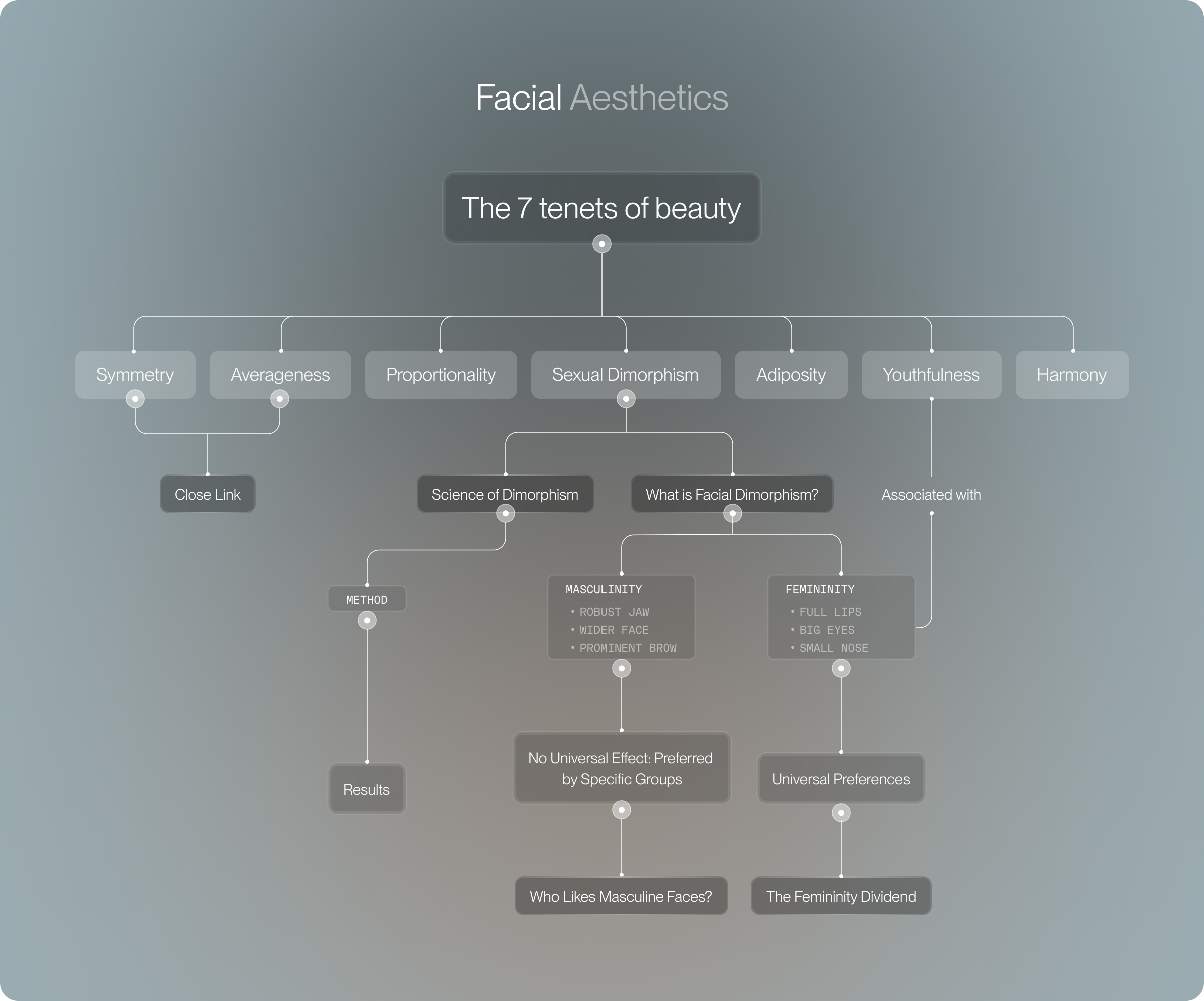
Figure 1.
Abstract
In facial aesthetics, sexual dimorphism refers to typical differences between men and women in their facial features. Sexual dimorphism plays a key role in attractiveness and is regarded as one of the six fundamentals of beauty. Across studies, cultures, and age groups, findings show that increased femininity consistently enhances female facial attractiveness, and it is thought to signal youthfulness and fertility. Conversely, there is no universal preference for masculine faces, but in short-term contexts and for certain groups of people, highly dimorphic male faces are preferred. Femininity is therefore essential for women’s aesthetics, while masculinity may be advantageous only in specific situations. Sexual dimorphism should be optimised while considering the other fundamentals of facial aesthetics, as harmony between features outweighs extreme traits.
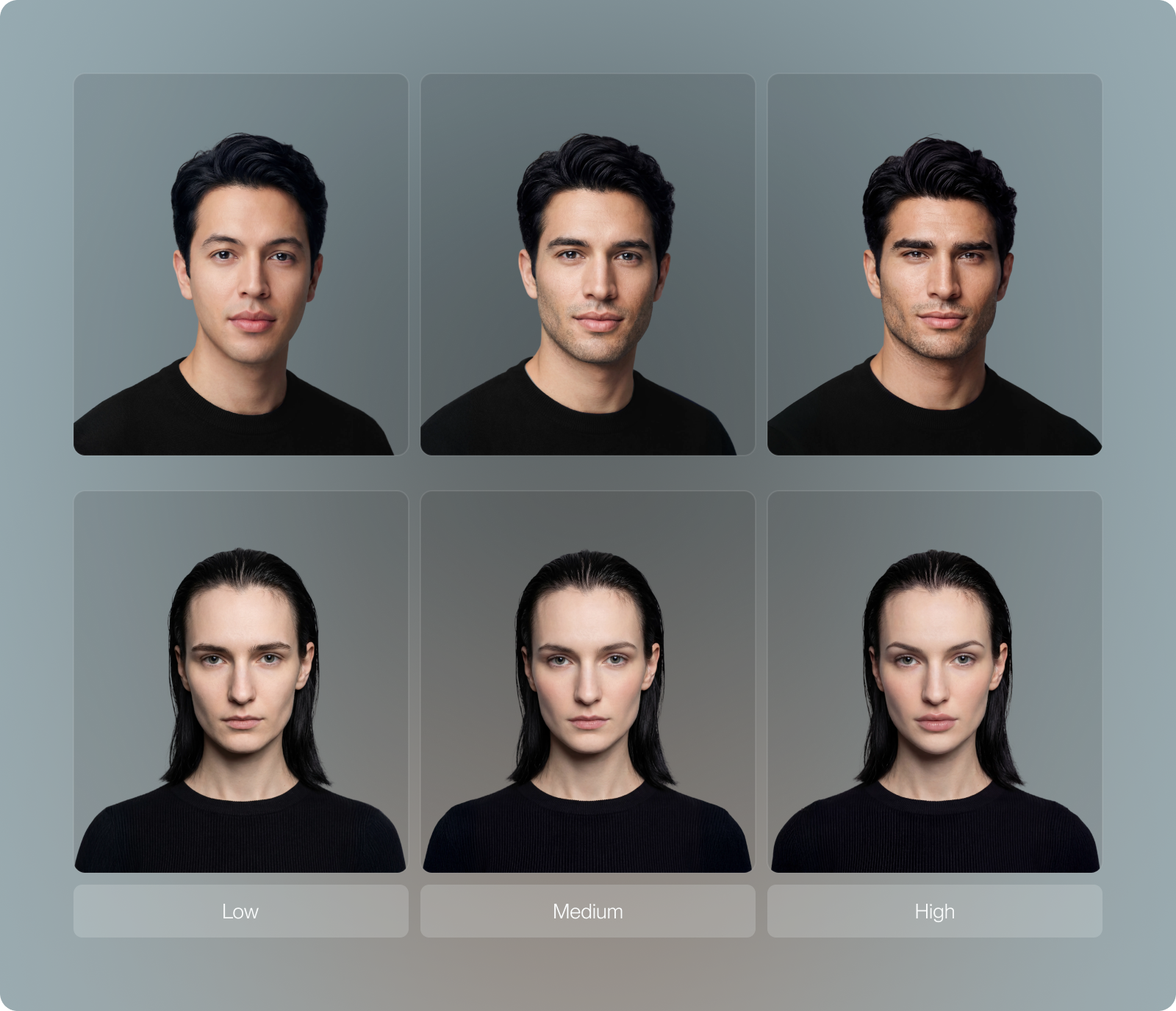
Figure 4.
QOVES Opinion
At QOVES, we see facial sexual dimorphism as vital to women’s aesthetics but secondary to men’s attractiveness. Enhancing feminine traits reliably increases perceived attractiveness in females, regardless of culture or population. Men with specific partner preferences or in particular contexts could benefit from increasing masculine traits, but for most, increasing masculinity will neither hurt nor improve their attractiveness.

Figure 3.
What is Facial Sexual Dimorphism?
In simple terms, sexual dimorphism refers to the physical differences between males and females. In this sense, facial sexual dimorphism in humans refers to facial characteristics that are generally found in men and women. Facial dimorphism is a result of hormonal changes related to testosterone and oestrogen, which take place during puberty.
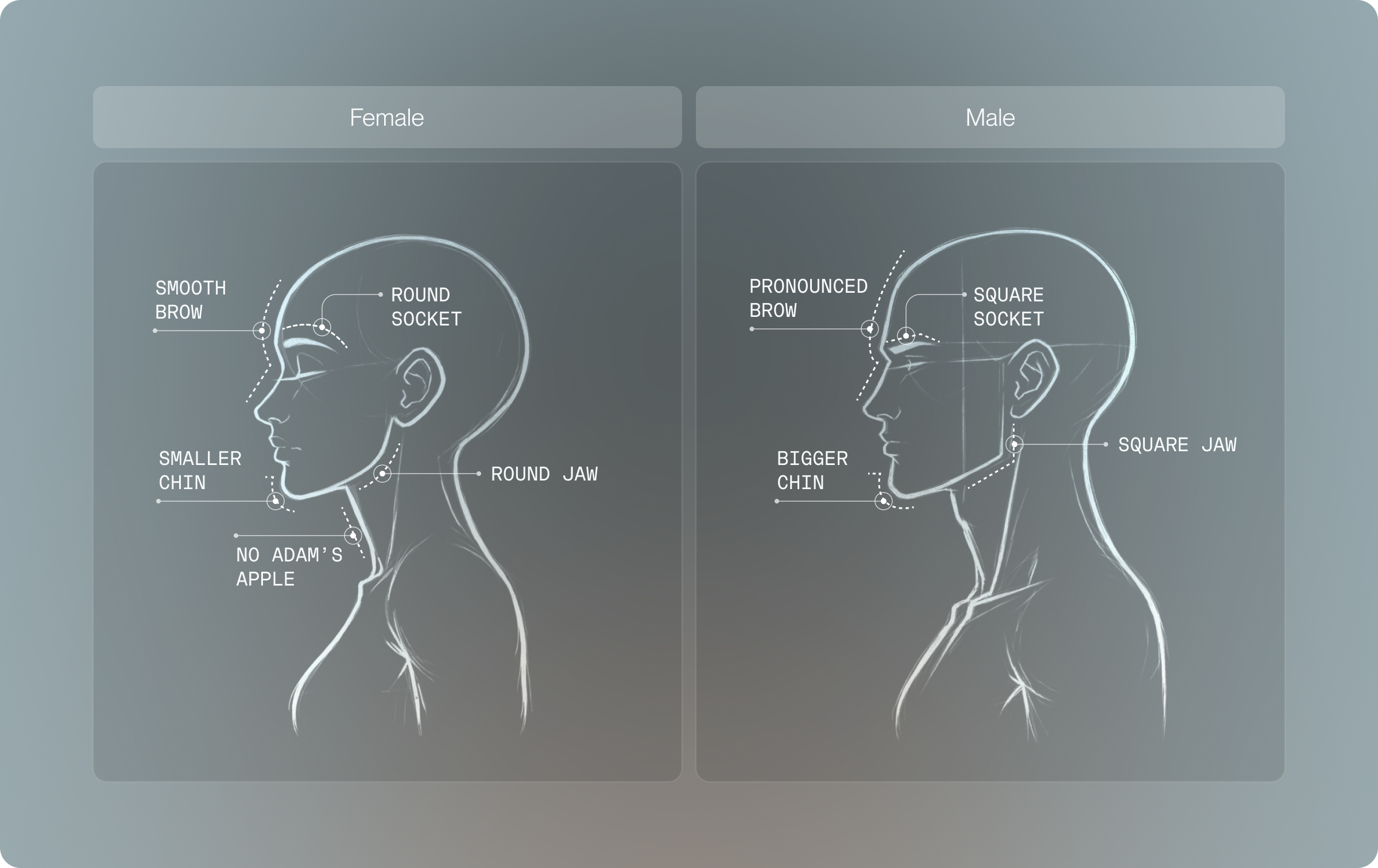
Figure 4.
Biologists talk about two types of dimorphic characteristics: primary sex differences and secondary sex differences.
Primary characteristics
These are directly related to reproduction and mating. In other words, they refer to the different sexual organs found in males and females. Primary sex characteristics are not often discussed in the context of “sexual dimorphism”. Instead, this term is usually reserved to talk about secondary sex characteristics.
Secondary characteristics
These are all of the sex differences that are not directly related to reproduction. Think of height, body mass, or facial hair. They are highly variable in expression across species, sometimes reaching spectacular levels, for example, in plumage differences in mandarin ducks.
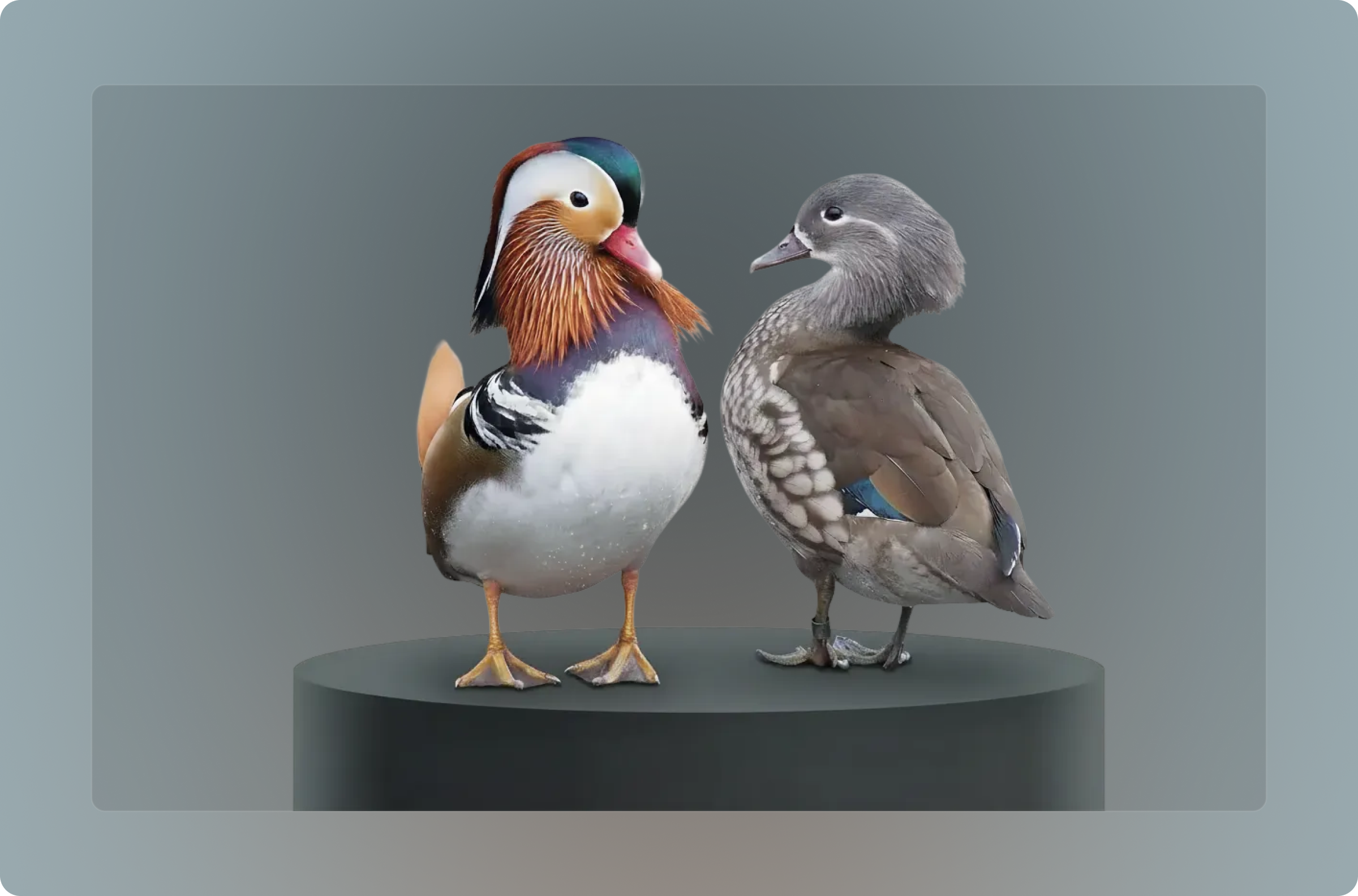
Figure 5. Sexual dimorphism on display: the ornamented male mandarin duck (drake) exhibits exaggerated secondary sex traits for mate attraction
Body dimorphism
One of the most evident secondary sex differences is body mass dimorphism. In humans and most primates, males are larger than females. This is also highly variable; in gorillas and orangutans, for instance, males are sometimes more than twice as large as females. In humans, however, this difference is much smaller. Men are often 7-8% taller than women and weigh about 15% more, on average1.

Figure 6. Non‑human primates exhibit pronounced body size dimorphism, whereas humans show reduced size divergence.
Facial dimorphism
Sexual dimorphism is also evident in human faces. This, of course, is the focus of the present article. Facial sexual dimorphism can be defined as the degree to which male and female faces differ in shape and features.


Before
After
Drag the slider to see how a male face changes when dimorphic characteristics are exaggerated.
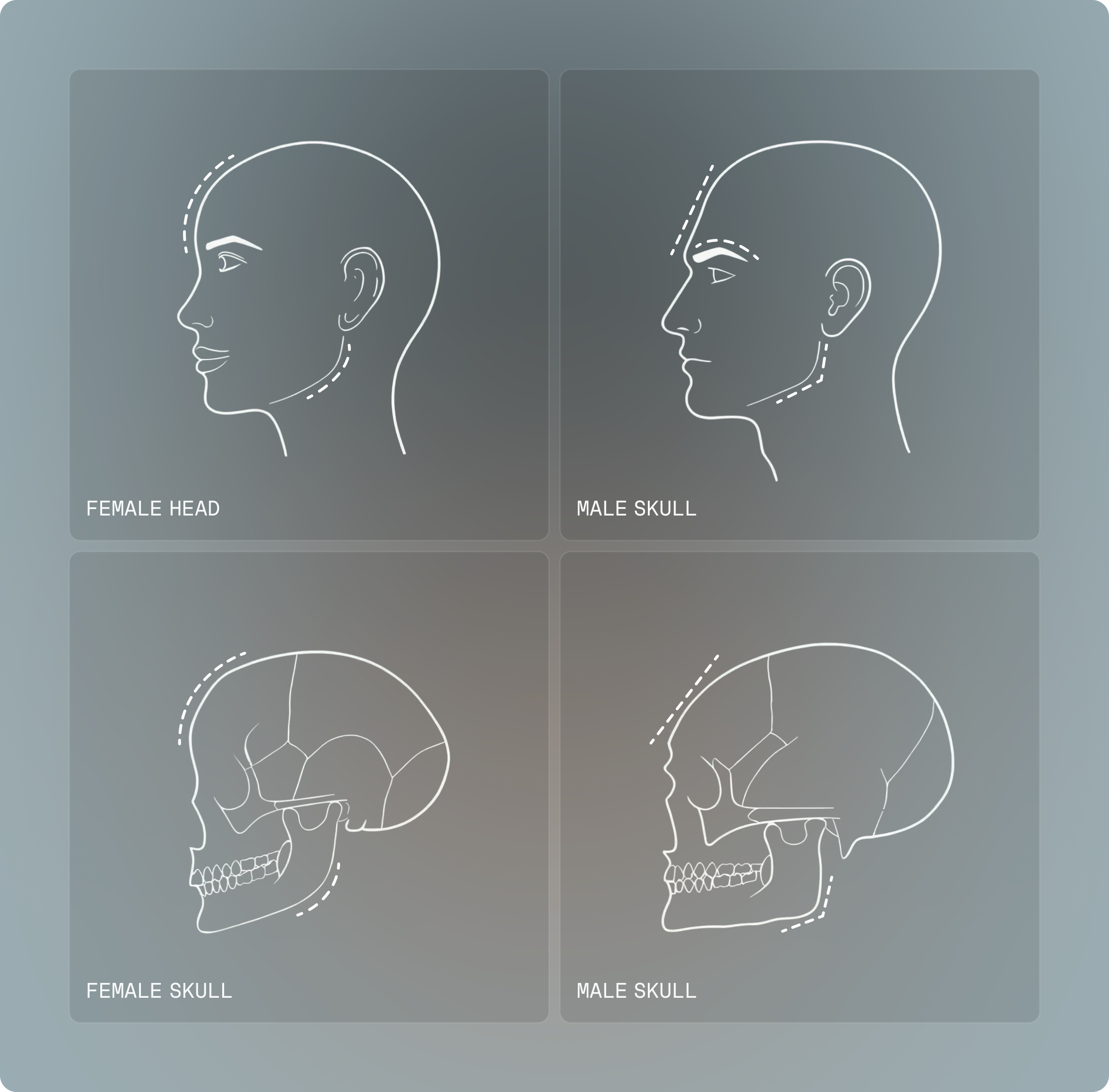
Features like jaw size and angle, brow prominence, and facial structure strongly diverge at puberty due to hormones (testosterone and oestrogen). Dimorphic traits shape our perceptions of masculinity and femininity, but what exactly makes a face look more masculine or feminine?


Before
After
Drag the slider to see how a female face changes when dimorphic characteristics are exaggerated
What Makes a Face Feminine?
These facial features are more pronounced in females and therefore contribute to our perceptions of femininity. Some are more variable across populations, and some weigh more for our perceptions of femininity. In no particular order, these are dimorphic characteristics of female faces:
- Fuller lips: Increased lip vermillion height is strongly associated with femininity4–6.
- Larger, wider eyes: Greater eye height and width ratios contribute to a more feminine appearance2,5.
- Prominent cheeks and midface: A more pronounced middle third of the face with narrower but prominent cheekbones are key feminine markers2,5.
- Smaller, narrower jaw and chin: Less prominent mandibular angle and chin, with a softer jawline2-4.
- Higher, arched eyebrows: Eyebrows tend to be thinner and sit higher on the brow.
- Narrower nose: Shorter and narrower nose compared to masculine faces4–6.
- Brow and Forehead: Smoother, less pronounced brow ridge, which sits higher in the face. A more rounded forehead contour2,5.
- Smoother skin: A smoother, less rugged and often lighter skin4–6.
- Overall softer, less angular features: Feminine faces are generally characterized by smooth contours and less pronounced bone structure2, 5.
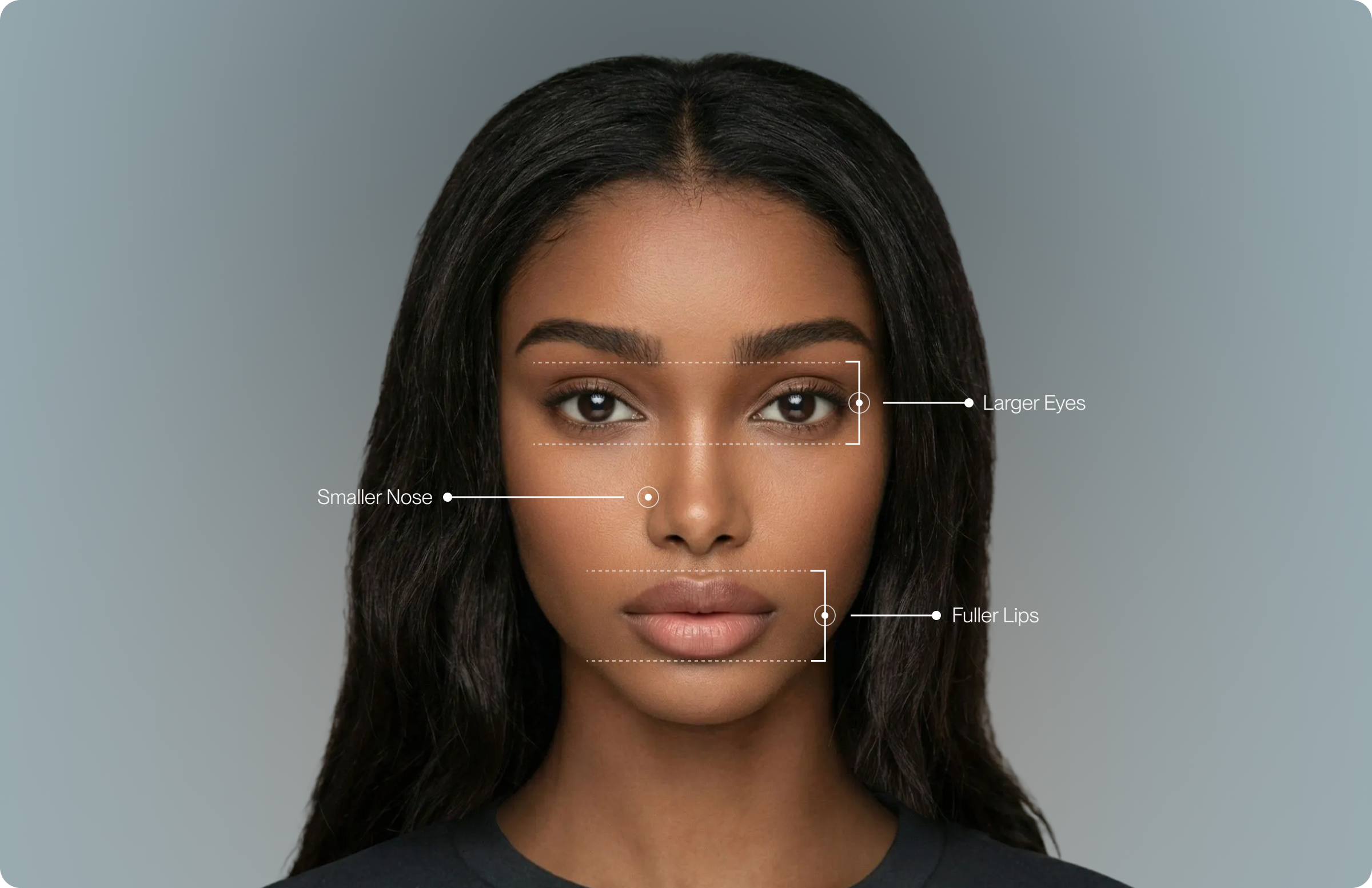
Figure 7. Female face with high dimorphism
What Makes a Face Masculine?
The facial traits listed below are a result of testosterone during puberty and are associated with masculinity. In no particular order, these are dimorphic facial features of males:
- Broader, more angular jaw and chin: Increased jawbone prominence, a wider mandible, and a sharper mandibular angle are hallmarks of masculinity4–6.
- Pronounced brow ridge and thicker eyebrows: The brow is more prominent, and eyebrows are thicker and straighter. This gives the appearence of smaller eyes2, 5.
- Longer, wider face: Greater upper and lower facial third ratios, with increased facial height and width2,5.
What about teeth? Although there are consistent sex size differences in canine teeth in humans, no studies have directly examined their role in facial attractiveness to our knowledge. The research team at QOVES is currently conducting original research on this topic.
- Wider nose: Masculine faces often have a broader nose2,3.
- Thinner lips: Lips are typically less full than in feminine faces2,5
- Lower, flatter cheeks: Cheekbones are less prominent compared to feminine faces4,5.
- M-shaped or receding hairline: Adds to perception of maturity, and more common in masculine facial profiles2-4.
- Facial Hair and Skin. Facial hair and rougher skin texture (studies on facial dimorphism almost always use clean-shaven faces to focus on structural features)2-4.
- Neck. Technically not part of the face, but a thicker and more muscular neck is perceived as more masculine7.
- Overall robust, more angular facial structure. A more ‘robust’ and defined bone structure, including wider cheekbones and a longer midface. In general, a broader, more square face shape2,5.
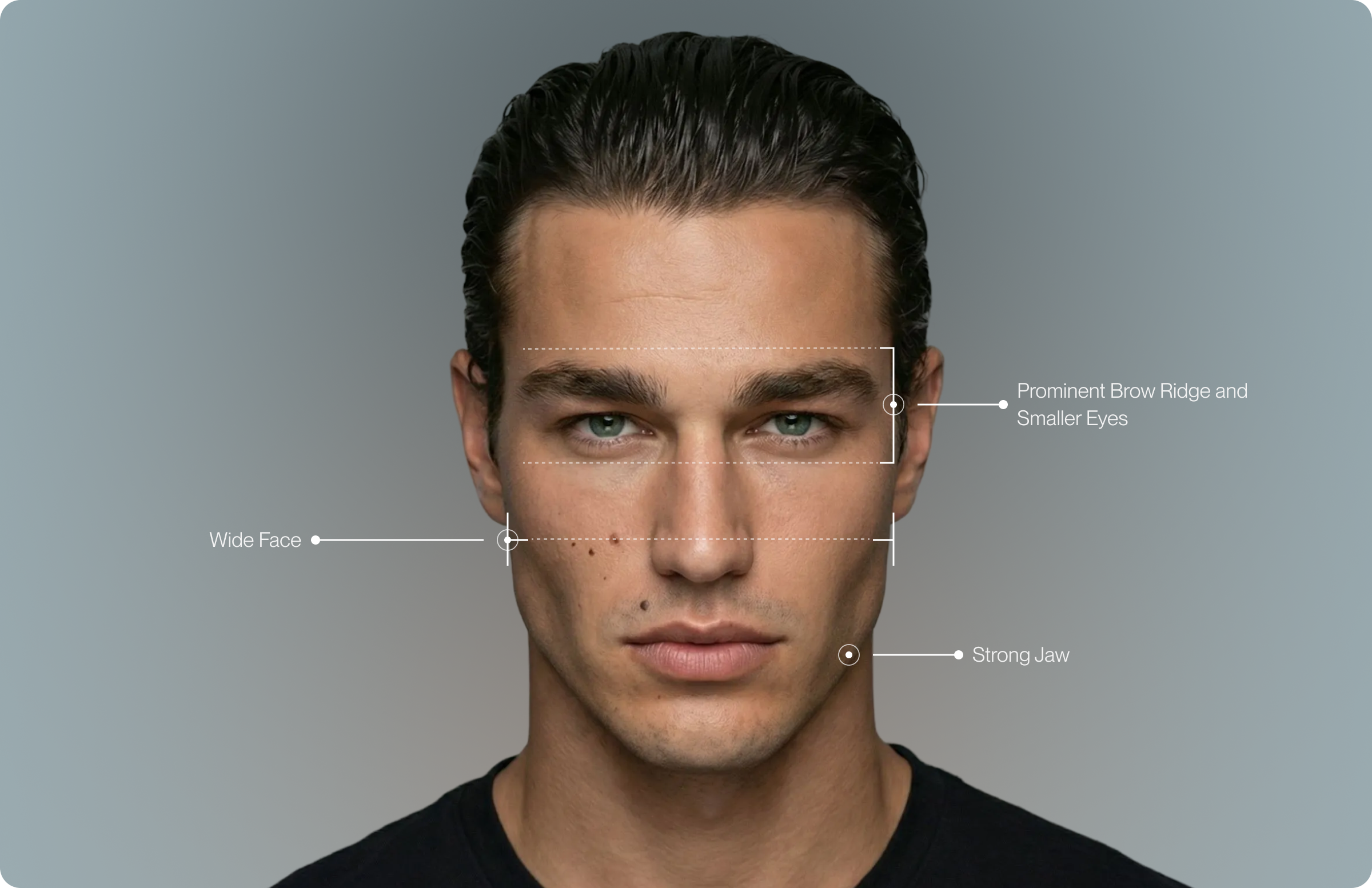
Male face with high dimorphism
Why Single Features Mislead
An important point here is that perceptions of masculinity and femininity come from configurations, not single features. Most individual facial traits overlap between men and women: plenty of men have small noses, and plenty of women have strong jaws. For example, consider the set of lips on the faces below; it is hard to determine sex based on this trait alone and the same pair of lips can be present in both men and women without looking out of place. However, when seeing a whole face, the pattern of multiple dimorphic features allows humans to accurately identify the sex of a face8, 9.
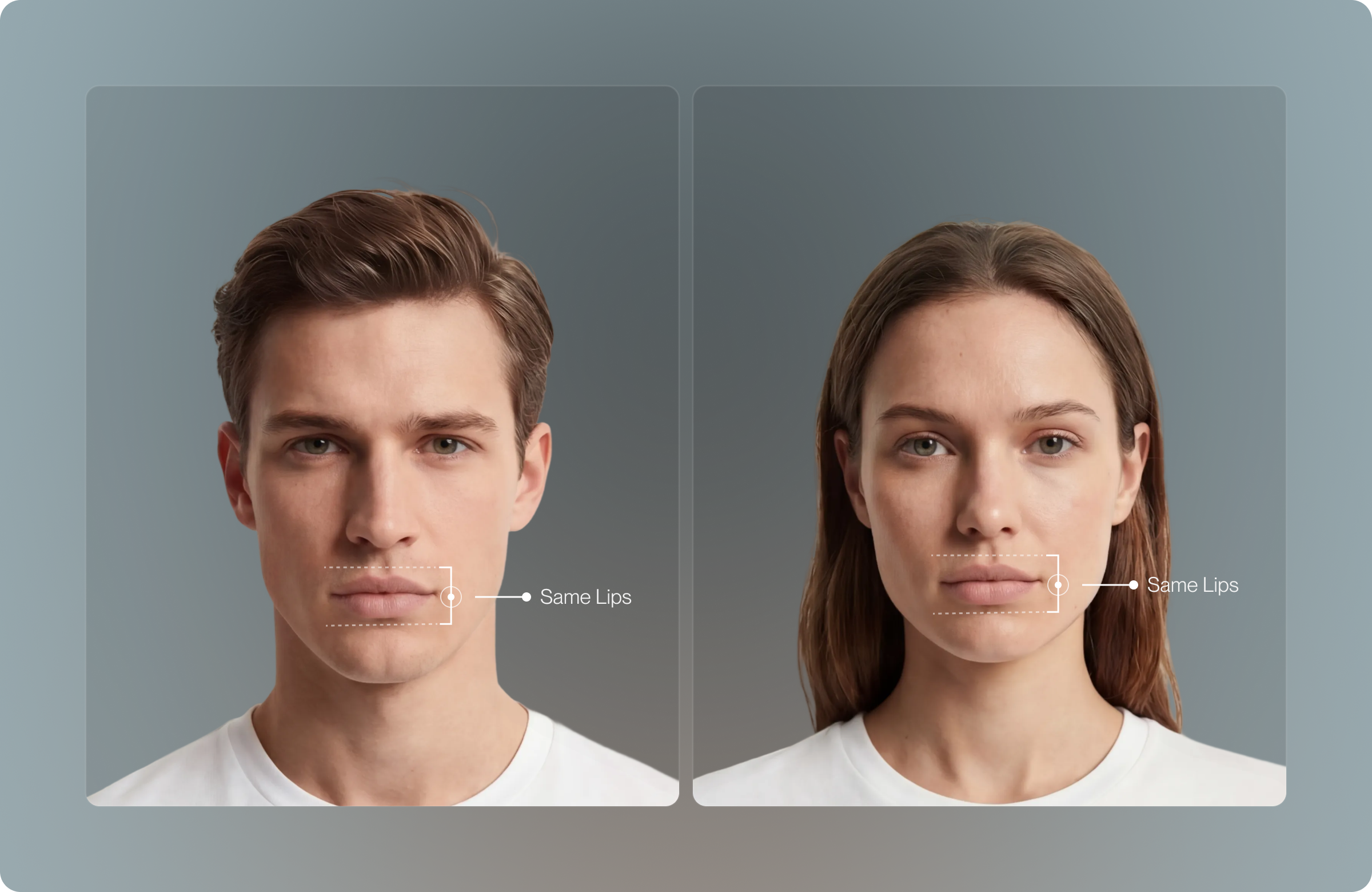
Individual features may be extremely similar in men and women. When we look at all features in conjunction, we can easily identify sex.
What signals masculinity or femininity is the composite of many dimorphic traits at once that, when taken together, make sex classification highly reliable, even though any one feature is a weak indicator of sex on its own4,10–12.
Dimorphism is weak per feature, robust in combination
On almost any single trait, male and female faces overlap heavily, but when you combine lots of small differences (jaw, brow, cheeks, lips), people can identify sex from a face with near-perfect accuracy (Rhodes, 2006).
How is Sexual Dimorphism Attractive?
More feminine (sexually dimorphic) faces are generally rated as more attractive across populations. This is observed in different research studies, using both manipulated and unedited, natural faces. Research shows that a composite of very attractive female faces has more feminine features than a composite of all women in a population13, 14. If you ask people to describe or create a beautiful female face, they will typically include feminine traits like fuller lips and smaller chins. Overall, all of these results reach the same conclusion: femininity is desired and considered attractive in female faces12.
The appeal of masculine faces is a current topic of debate in the scientific community. The results are complex and far from conclusive. To some, more masculine traits are considered attractive, whereas many prefer more neutral or even slightly feminised traits in male faces15. The current evidence suggests there is no universal preference for facial masculinity like there is for facial femininity12. However, particular demographics do show more consistent preferences for more traits, a topic we discuss in detail in the section Who Likes Masculine Faces?
The ‘macho face’ isn’t a universal crush.
In a classic study by Perret et al. (1998), women actually preferred slightly feminised male faces over hyper-masculine versions

Models with high sexual dimorphism
There are a number of theories as to why facial dimorphism plays a role in attractiveness and partner preferences. For many years, the leading hypothesis was that they are the result of sexual selection, with more masculine faces signalling health, high testosterone levels, and social status. Feminine faces are instead thought to reflect youthfulness, fertility, and reproductive fitness6. However, more recent work has suggested that preference for facial dimorphism (in males in particular) is largely influenced by cultural and ecological context, which challenges the idea of an innate biological predisposition. We explore both of these hypotheses in “Why is Dimorphism Attractive?”
The Benefits of Facial Dimorphism
Facial sexual dimorphism doesn’t just change beauty scores; it also shapes social impressions, romantic outcomes, and even workplace judgments. Of note, the benefits are sex-asymmetric: increasing femininity in women reliably boosts attractiveness and advantages across contexts, while masculinity in men brings context-dependent trade-offs, which we discuss below4, 10–12.
The Femininity Dividend
Across populations, more feminine female faces, those with fuller lips, a smaller chin, and a smoother brow, are consistently judged more attractive9,12,16. That increased attractiveness reliably brings about a broad range of social advantages.
Halo Effect (’What is Beautiful is Good’)
People naturally associate a single positive attribute (like attractiveness) with a large number of positive judgments in other domains. Research has shown that attractive, feminine faces tend to be perceived as more intelligent, sociable, emotionally stable, and trustworthy17,18. This is also known as the classic "What is Beautiful is Good" phenomenon and is considered to be a cognitive bias for beauty. These positive attributions generalise to real outcomes (hiring, pay, social inclusion), and the gains are often larger for women19–22.
Purity Bias
Humans have a tendency to infer moral worth from attractive faces. The field of moral psychology has found that attractive faces are taken to be more pure and less capable of moral wrongdoing23. Feminine female faces especially benefit from "cleanliness/purity" perceptions that reduce the perceived likelihood of norm violations.

Health & Fertility Signal
Femininity in women is strongly tied to oestrogen-linked traits and neoteny, meaning that it acts as a signal of youth, fertility, and overall reproductive health. The result is that feminine traits are preferred cross-culturally ("fertility hypothesis"). Even if objective health links vary, the perception of health/fertility is robust, and perceptions strongly drive choice10,24.
Dating Dividend
Increasing femininity reliably improves mate desirability and expands options in both short- and long-term contexts, with supportive evidence across manipulated and natural faces14.
The Confidence Loop
Improved appearance, through increased feminine facial features, can positively impact self-perception. Studies reveal that people with a more positive self-image carry themselves in more attractive ways, with an improved posture, a steadier gaze, and increased social approach25,26. It is considered a loop because increased confidence leads to attractive behaviours, which in turn lead to positive social feedback, increasing confidence again.
Self-Esteem Multiplier
Achieving a glow-up or enhancing facial aesthetics can elevate one’s self-esteem, which in itself is associated with a large number of positive benefits27. Psychological research has shown that self-esteem is associated with better mental health, resilience, improved interpersonal relationships, and life satisfaction26,28.
The Masculinity Trade-Off
By contrast, facial masculinity in men (pronounced brow ridge, wider jaw, longer lower face) brings mixed returns. Preferences for highly masculine male faces are not universal and often vary with ecology and culture; some populations prefer neutral or slightly feminised male faces11, 29. Masculinity can signal dominance and physical strength, but it can also reduce perceived warmth, honesty, and parental investment, which matters for long-term partner choice10. In this scenario, enhancing masculine features can give you an advantage in certain fields, but often at a cost.
Dominance & Strength Signal
More masculine faces are read as physically stronger and higher-status30, which can confer advantages in zero-sum or competitive contexts (male-male competition, protection/status heuristics). This is the clearest upside of male facial masculinity.
Short-Term Mating Advantage
Some studies have suggested that masculine faces can attract short-term interest in some contexts31; however, the same traits may not convert to long-term choice when care, warmth, and reliability are prioritised. Increasing masculine facial features, nevertheless, might give you the upper hand in short-term mating scenarios.
Warmth & Trust Trade-Off
The cost side: highly masculine male faces are often judged as less cooperative and lower in parental investment (an echo of the “dominance vs. dad” trade-off)15. An overall attribution of poor prosocial attributes to very masculine faces can hurt long-term partnership prospects or leadership evaluations in high-trust, collaborative environments10, 15.
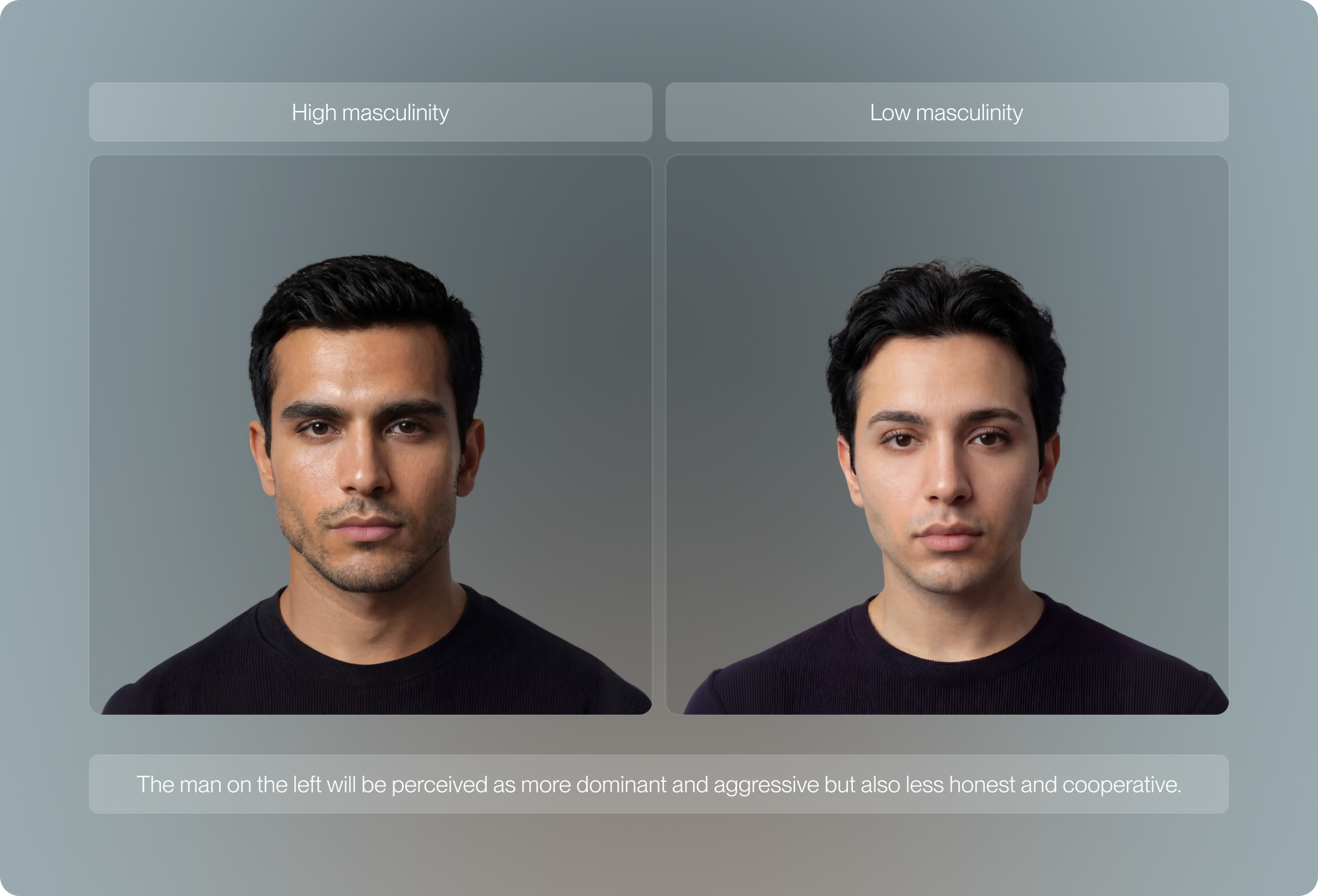
Masculine faces look dominant, but also a bit risky.
When viewers see masculinised male faces, they reliably rate them as more dominant and mature, but also as less warm, less emotionally supportive, and poorer parents (Perrett et al., 1998; Rhodes, 2006).
Health and Immunocompetence
The classic immunocompetence handicap account predicts that masculine traits signal robust genes despite testosterone’s costs, but empirical support is weak and inconsistent, and preferences don’t increase under high pathogen load as the theory would predict32,33. In practice, the evidence is inconclusive34, but there is a chance that masculinity could signal robust health.
Workplace Perception
Context is crucial, masculine faces may benefit in competitive, risk-prone roles in which assertiveness, dominance, and aggression are valued, yet backfire in roles demanding approachability, trust, and empathy.
In summary: The effects of facial sexual dimorphism are sex-asymmetric. Feminine cues in women tend to stack the Halo, Purity, Competence, Dating, and Confidence effects. Masculine cues in men deliver dominance and strength signals with important trade-offs for trust and long-term partner value. For men, understanding and carefully considering the perceptions associated with masculine traits is key to turning facial dimorphism into advantage.
Why is Dimorphism Attractive?
Evolutionary Theory
This perspective states that beauty standards have been shaped by mate choice pressures in our evolutionary past. Leading American anthropologist Donald Symons argues that standards of human beauty are not arbitrary cultural inventions, instead, they reflect psychological adaptations shaped by sexual selection to detect reproductive value and mate quality. In simple speak, humans have been wired to like what increases their chances of successful reproduction.
The Fertility Hypothesis
In this view, facial femininity in women signals youth, fertility, and overall reproductive fitness. In turn, men would find this more attractive and males that selected more feminine females would ‘outreproduce’ those that did not. In a study published in the prestigious journal Nature10, Perrett and colleagues state that oestrogen-dependent characteristics of the female body correlate with health and reproductive fitness and are thus found attractive. In 2000, Johnston formally laid out the Fertility Hypothesis and explained that oestrogen during puberty slows lower-face bony growth and promotes feminine and neotenous proportions, such as fuller lips, and a smaller jaw and chin24. Given that facial dimorphism becomes more apparent after puberty, it is taken to be a sign of sexual maturity and reproductive fitness3. Research has demonstrated a universal liking for feminine facial traits, consistent with the Fertility Hypothesis.
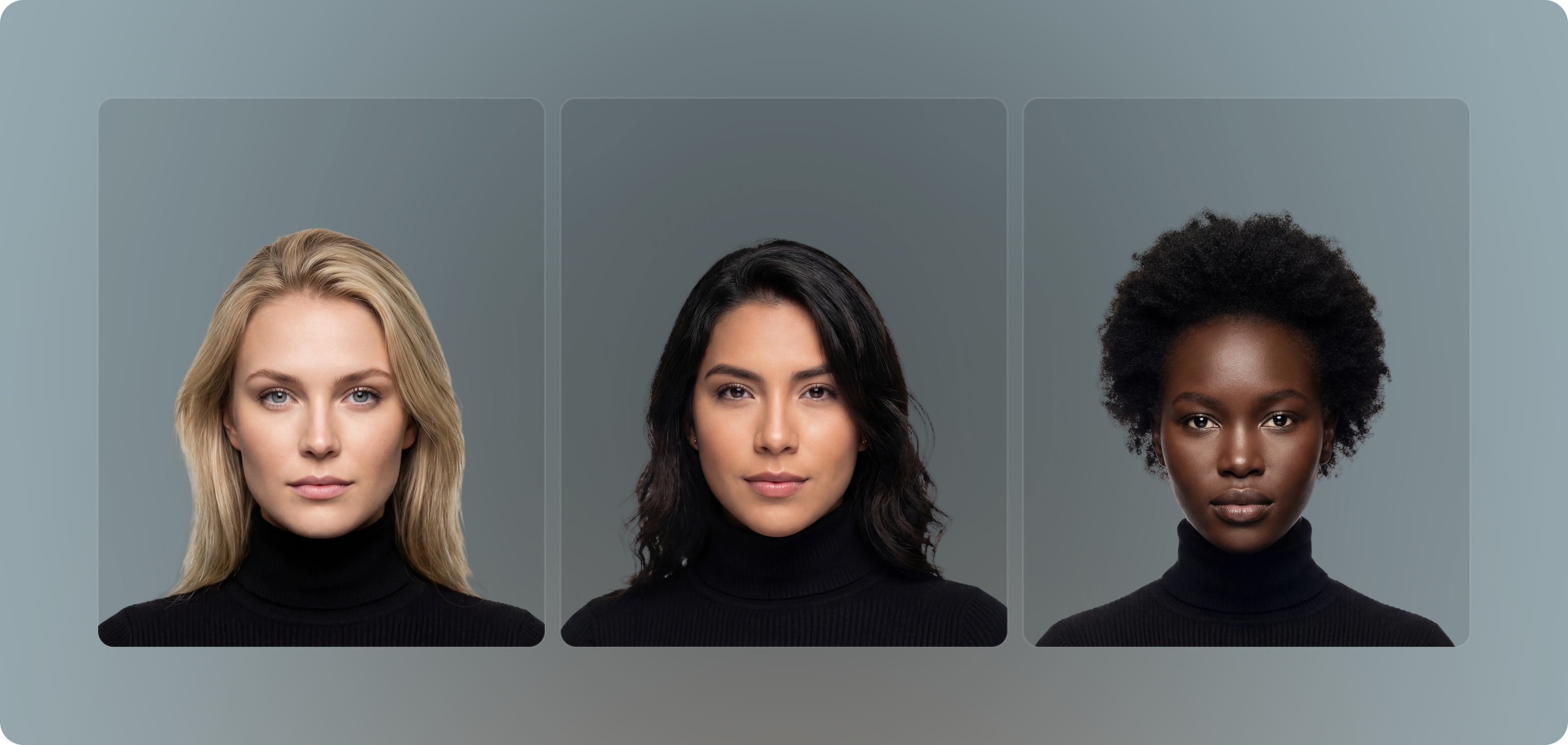
Feminine features signal youthfulness and reproductive health.
Feminine wins by a landslide.
Across large samples from multiple countries, more feminine women’s faces are consistently rated as more attractive, while extra facial masculinity in men barely moves the needle (if it does at all) (Perrett et al., 1998; Kleisner et al., 2021; Kleisner et al., 2024).
Immunocompetence Handicap Hypothesis
This hypothesis states that masculine facial traits reflect genetic quality and are therefore favoured. Originally proposed by Folstad and Karter33, the core idea is that testosterone boosts the development of masculine features and, at the same time, suppresses immune function, meaning that only those with superior immunity could withstand the costs of high testosterone. This theory would predict that preference for more masculine traits would be stronger in high-pathogen contexts, as selecting for health would be more crucial. However, evidence shows the opposite: facial masculinity is actually preferred in urban, industrialised settings11,29. Overall, empirical support for this theory is rather weak.
The Dominance Theory
Another theory regarding masculine faces states that it is not about reproductive health, but rather about what it communicates about status and social behaviour35,36. Whereas men are tuned to detect fertility and reproductive fitness, women instead are sensitive to signals of status, resource acquisition capacity, and parental investment willingness. A masculine face may be perceived as more dominant and a higher social rank, which could have historically appealed to women, as dominant males have greater access to resources and may provide better protection3, 36. Research shows that men with more masculine faces tend to have more muscular bodies and physical strength7, which would’ve been advantageous for male-male competition in the past.
Parental Investment and Social Perception
As humans evolved, social structures changed toward more monogamous, cooperative societies, away from intense male-male competition and aggressiveness. Very masculine features may actually signal undesirable traits for long-term partners, like aggressiveness, unfaithfulness, or dishonesty15. Women may then choose to avoid extremely masculine faces, opting instead for a more moderate combination of social status, health, and parental investment. This is consistent with modern research, which reliably shows that very masculine faces are indeed associated with dominance but also with less warmth, honesty, cooperativeness, and quality as a parent37, 38.
One example of this is the fact that our primate ancestors showed extreme levels of sexual dimorphism in the canines (very large on males); humans instead show minimal differences, potentially a result of female selection against extremely masculine traits.
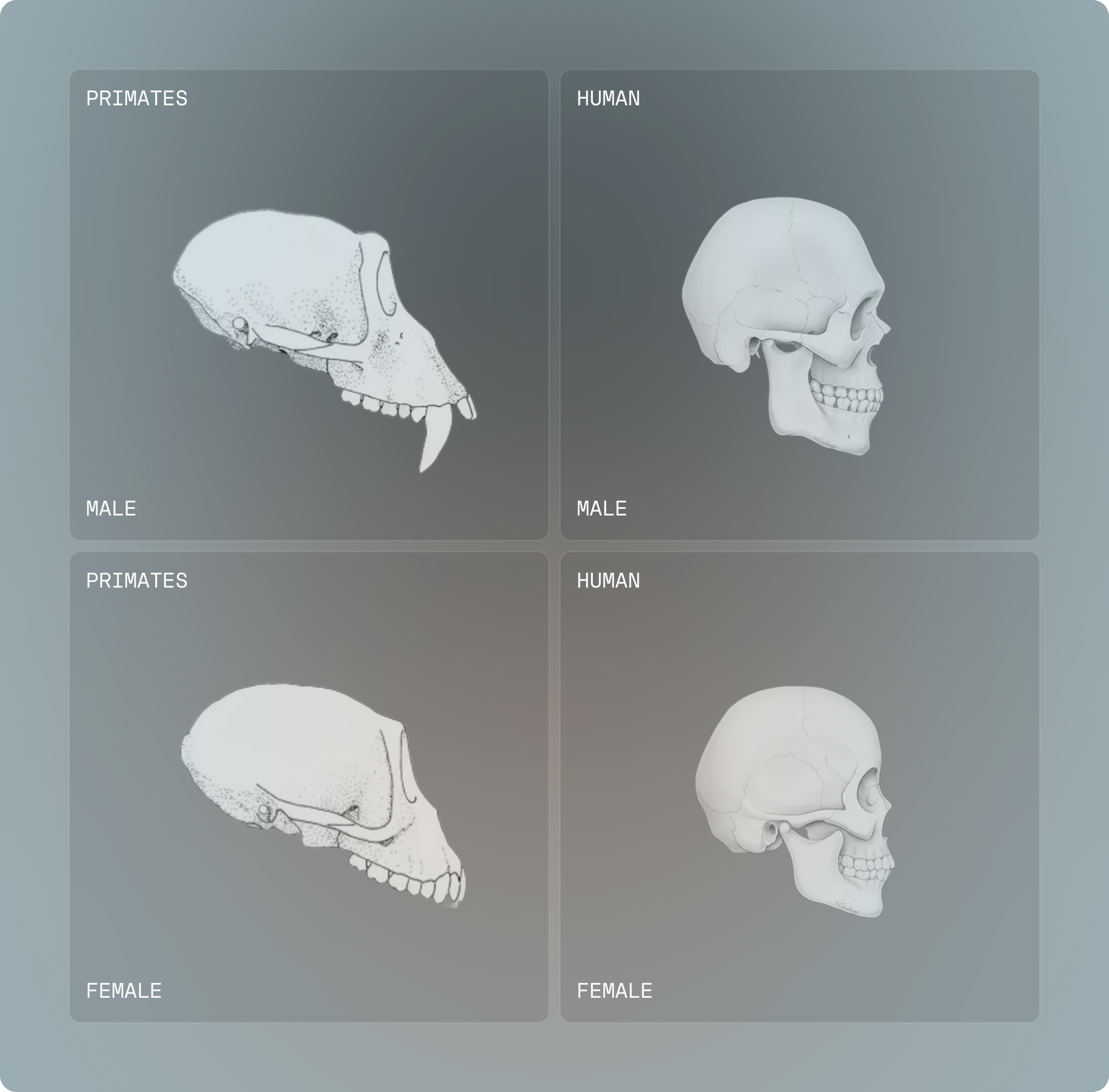
Canine dimorphism in primates versus humans
Cultural Influences
The role of cultural influences on the perception of sexual dimorphism has been starting to gain attention in response to mixed and conflicting results on the relationship between facial masculinity and attractiveness. Whereas a preference for feminine traits occurs all over the world, and seems to be a result of innate biology, the role of masculine features is poorly understood.
Learned Stereotype and Status Signal
A highly cited study by Scott and co-authors found that people in small-scale societies (hunter-gatherer or farmers) did not show a preference for high sexual dimorphism, compared to those in urban and industrial populations11. The authors theorise that this might be a result of a “learned stereotype” in which very masculine men are often portrayed in the media as dominant and higher-ranking in the social structure. Another view is that, as societies develop, people can gain highly differentiated status from roles that don’t exist in other places. It is plausible that more masculine-looking faces are associated with those roles, either due to a real relationship or due to media portrayals, which would shift what people find attractive. However, some of the latest studies have found no relationship at all between masculinity and attractiveness16.
Facial masculinity, therefore, appears to respond to surrounding social and cultural conditions to a greater extent than symmetry, averageness, and facial femininity, which show universal effects.

Nuances of Dimorphism
Facial Dimorphism Matters More for Women
As we have seen throughout this article, facial sexual dimorphism is sex-asymmetric, meaning that it affects men and women very differently. For women, increasing femininity (smaller chin and nose, smoother brow, fuller lips) reliably boosts perceived attractiveness across cultures and populations. For men, higher facial masculinity yields mixed returns: it can raise perceived dominance and strength, but it often carries social costs and most of the time it does not actually increase attractiveness.
The classic experimental study by Perret et al.10 already hinted at this notion, as results showed a consistent preference for feminine faces and an advantage for slightly feminised, rather than masculinised, male faces. A universal preference for feminised features in men has not been established, but recent research does support the underlying idea that feminine traits are universally preferred, whereas masculine traits are not.
In 2021, Kleisner and colleagues4 conducted a morphometric study looking at 1317 faces from eight different populations spanning South America, Africa, and Europe. They used unedited, natural faces and used facial landmarks to quantify sexual dimorphism. The authors found that across all populations, feminine women’s faces were rated as more attractive, whereas more masculine men’s faces were not4.

Across the world, more feminine faces are perceived as more attractive.
Three years later -in 2024- Kleisner (and co-authors)12 decided to re-test their hypothesis in a larger, more diverse sample. This time, the researchers used 1550 natural, unedited photographs, and again used geometric landmarking to determine the degree of sexually dimorphic traits, essentially assigning a dimorphic score to each face. Participants from 10 populations across the world were involved in this experiment (see map below). The results were conclusive: there was a universal positive effect of femininity on male assessment of female beauty, and a null or weak effect of masculinity on female evaluation of male facial attractiveness12.
Such contrasting results could be explained by the fact that oestrogen is linked to feminine facial traits, which is perceived to be a cue for youth and fertility, making it a cross-cultural, universal attractor for men38. On the other hand, the ‘good genes via testosterone’ story for male facial masculinity has weak and inconsistent empirical support; a recent 2022 review by Lidborg and colleagues suggests that facial masculinity is not a reliable marker of fitness1.
Same species, different dimorphism.
A global morphometric study of over a thousand faces found that the degree and type of facial dimorphism vary by population: some populations show stronger size-related dimorphism, others stronger shape differences. Yet in all of them, feminine female faces are reliably preferred over less feminine ones4, 12
Who Likes Masculine Faces?
Although there isn’t a universal preference for highly masculine faces like there is for femininity, there are some contexts and some demographics (i.e., specific groups of people) who do find sexual facial dimorphism in men appealing.
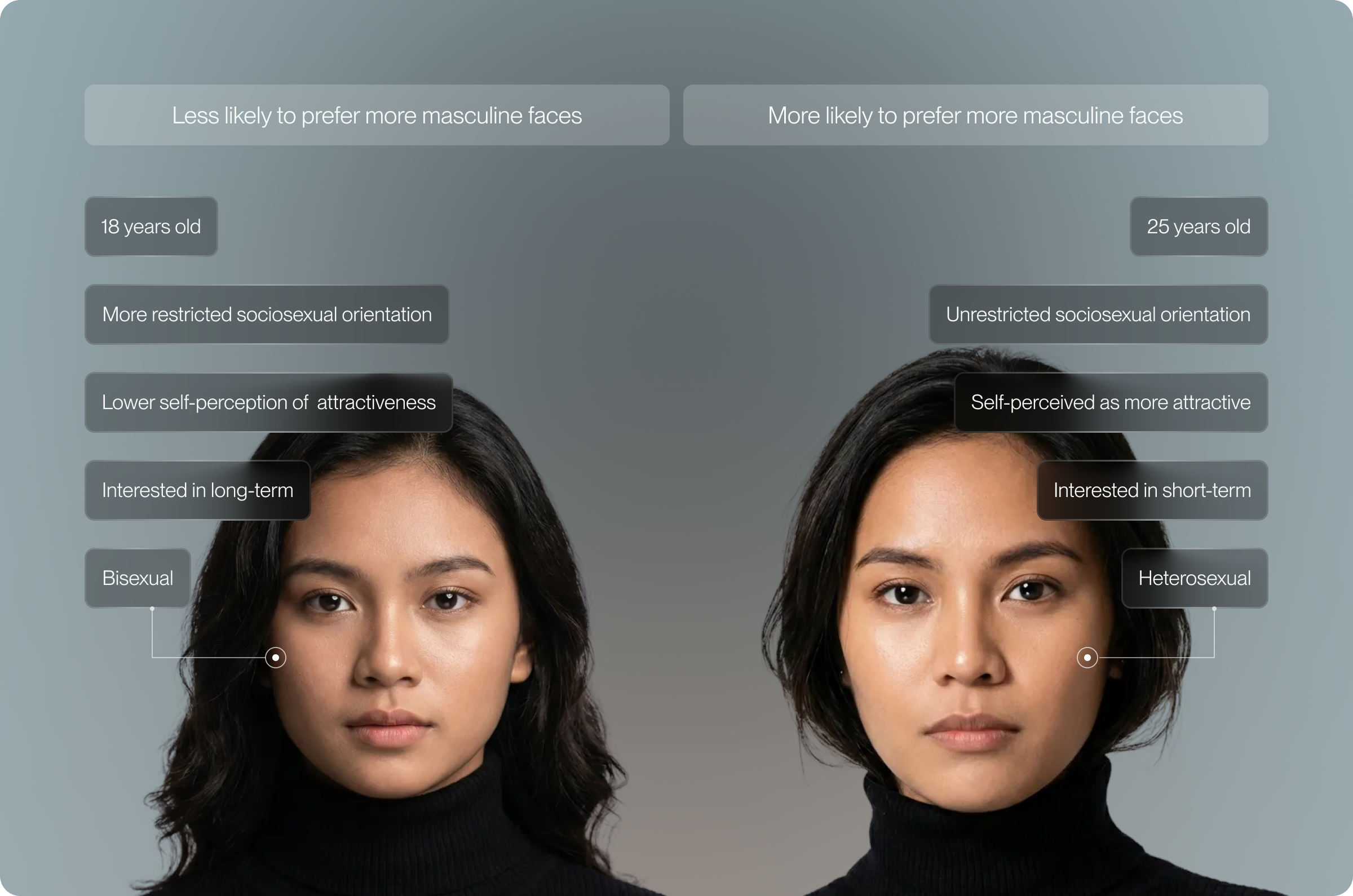
Cultural Variation
Some research suggests that attraction to masculine male faces is actually strongest in countries with higher health and human development indices, and where openness to uncommitted sexual relationships (sociosexuality) is higher29.
Sexual Orientation
A 2020 study by Batres and colleagues using a sample of over 27 thousand women found that heterosexual women who reported some sexual attraction to women (63% of their sample) preferred less masculine faces compared to those strictly attracted to men39. Among homosexual and bisexual men, preferences for facial masculinity vary by sexual orientation and sexual role. Gay men prefer more masculinised faces compared to bisexuals, and those identifying as “bottoms” or “versatiles” also show a preference for dimorphic features compared to those self-described as “tops”40.
Your brain cares about your type, not generic beauty.
Neuroimaging shows that reward regions respond most strongly to attractive faces of the sex you’re attracted to, rather than beauty per se41.
Relationship Context
Male faces high in dimorphism are often rated as more attractive for short-term relationships, compared to long-term prospects31. Paradoxically, beardedness was preferred for long-term relationships in one study31.
Individual Demographics
Age
Studies have found a positive association between a woman’s age, within fertile years, and preferences for sexual dimorphism in male faces42. Batres et al. supports this finding and reports a slight increase in the preference for more masculine features from ages 18 to 2539. Of note, this effect is very small.
Sociosexuality (openness to uncommited relationships)
Women with an unrestricted sociosexual orientation show stronger preferences for masculine faces, which is consistent with cross-cultural research showing a preference for dimorphism in countries where this attitude is more common43. Unrestricted sociosexual orientation means having a higher willingness to engage in uncommitted sexual relationships, often measured through questions such as “Sex without love is OK”.
Self-perceptions
According to a 2020 set of studies by Docherty and colleagues, women who perceive themselves as more attractive prefer more masculine faces30. Notably, the same set of studies found that there was no correlation between third-party ratings of facial attractiveness in females and preferences for dimorphism30. These suggest that it is beliefs about their own appearance, rather than objective facial aesthetics, which affect preference for facial masculinity.
Facial Dimorphism Across Cultures
Cross-cultural evidence shows that preferences for sexually dimorphic faces appear strongest in developed, urban contexts. In a 12-population study spanning small-scale to highly urbanised groups, attraction to exaggerated sex-typical traits (feminine women, masculine men) was only observed in high-development settings11. In contrast, in several small-scale societies, these patterns were attenuated or even reversed (preference for slightly feminised male faces). Relationship context also mattered: some groups showed masculinity preferred in short-term contexts but neutral/feminised faces in long-term contexts. For example, in the UK, facial masculinity was favoured for short-term relationships, but neutral and more feminine faces were preferred for long-term prospects11.
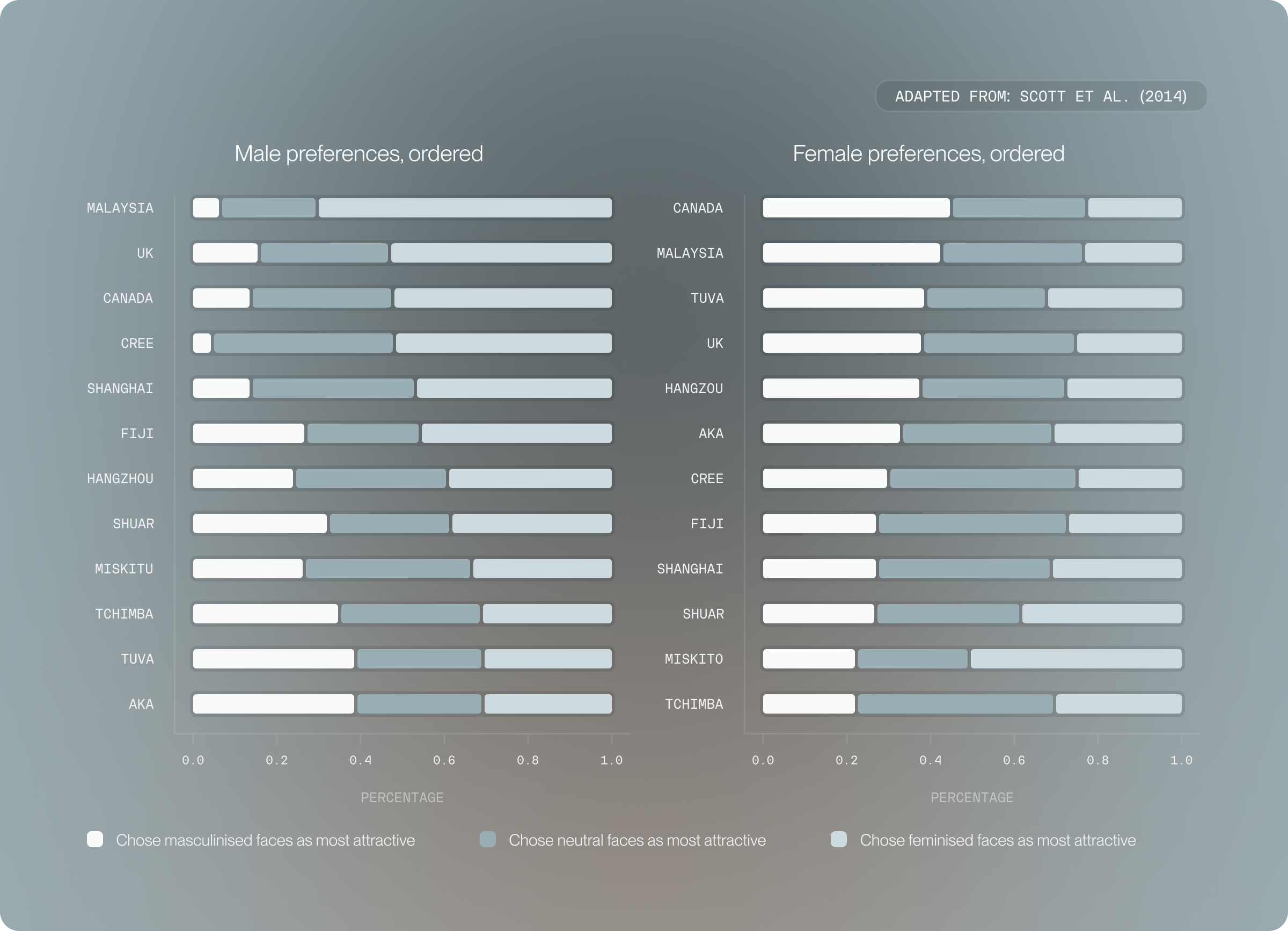
Adapted from Scott et al. (2014).
A larger 34-country analysis refined these patterns: women’s preferences for masculine male faces were strongest where national health and human development were higher and where sociosexuality (openness to uncommitted sex) was higher44. In terms of research methods, this study used manipulated face pairs in a two-alternative forced-choice task.
Beyond preferences, the actual degree of facial dimorphism in populations also varies. In other words, some countries show more masculine and feminine faces overall. A study using natural, unmanipulated faces and geometric morphometrics across eight populations (N=1317), revealed that European and South American samples showed larger facial sexual dimorphism than African samples4. In this study, the association between dimorphism and attractiveness was moderate for women but weak/absent for men4.
Sexual Dimorphism and Neoteny
A discussion of sexual dimorphism deserves a mentioning neoteny (and impressions of youthfulness in general), as the two interact to shape perceptions of attractiveness. Research shows that enhancing feminine features in female faces increases attractiveness, partly because these features also signal youth and fertility3. This overlap means that sexual dimorphism in women often aligns with neotenous traits, making highly feminine female faces appear more youthful and thus more attractive10, 45. However, for male faces, extreme sexual dimorphism (very masculine features) may reduce attractiveness, as these features are less associated with youthfulness and can even evoke negative personality attributions10, 15. For an in-depth discussion of the role of neoteny and cues of youthfulness for facial aesthetics, see our article Facial Youthfulness and Beauty.
The Science of Sexual Dimorphism
Sexual dimorphism in faces, defined as differences in facial features between males and females, has been established as a fundamental aspect of facial aesthetics and beauty. The positive effect of femininity is remarkably stable across different research methodologies and samples. In stark contrast, the impact of masculine facial traits on attractiveness is highly sensitive to methods and context.
How is Dimorphism Measured?
Natural Faces
Researchers commonly use geometric morphometric analyses, which involve identifying facial landmarks (such as the eyes, nose, jaw, and cheekbones) and quantifying the spatial relationships between these points to capture shape differences between male and female faces4. In simple words, this technique allows researchers to get an objective measure of differences in facial features across sexes. Some studies also use facial ratios, for instance, jaw width to face width, or nose width to face width, to quantify masculinity or femininity8.
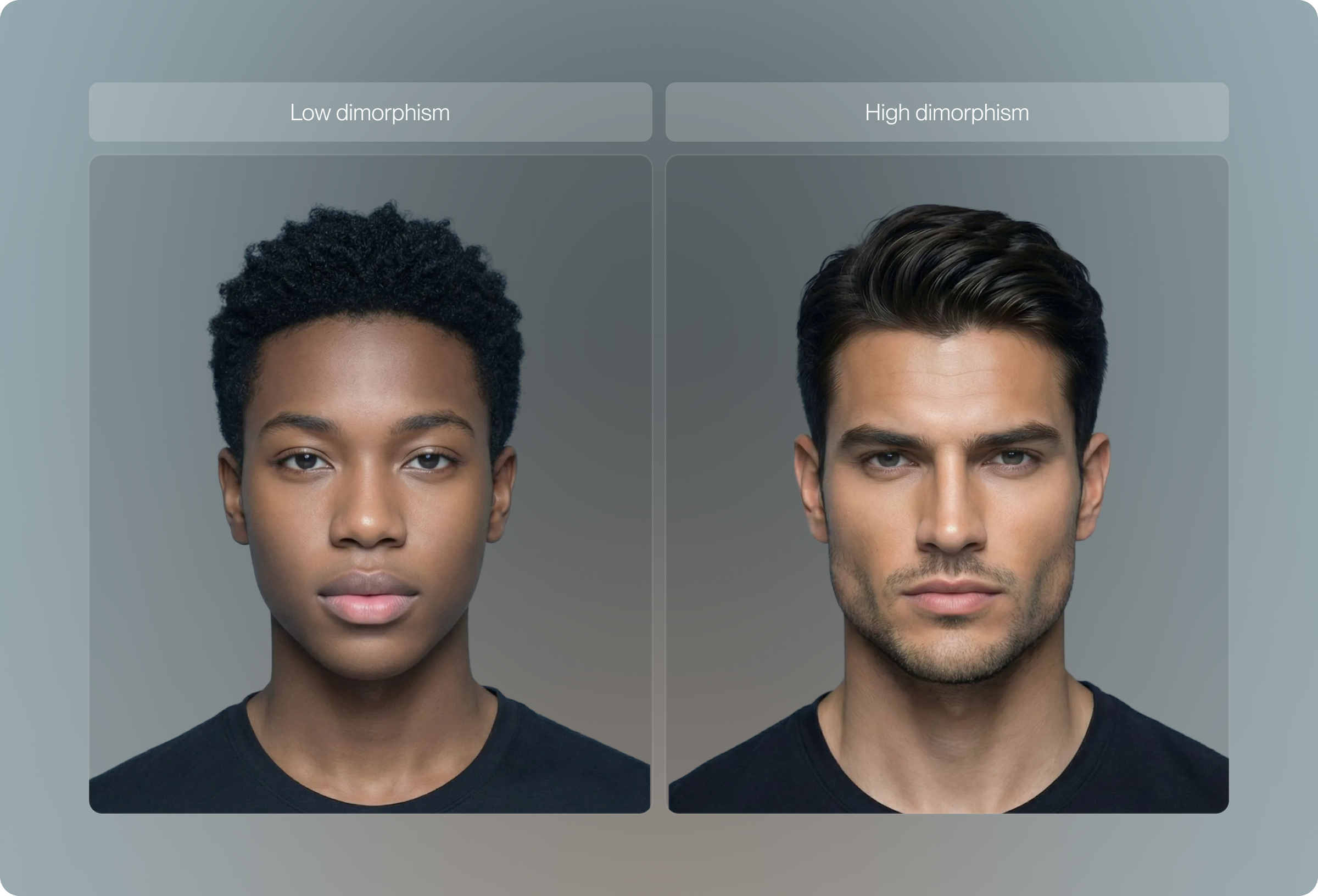
Experimental Manipulations
To experimentally manipulate sexual dimorphism, researchers often use morphing software to create masculinised or feminised versions of faces. This is achieved by averaging many male and female faces to get a prototypical male and female face. Individual faces are then manipulated along the vector that represents the difference between these averages, producing a continuum from more feminine to more masculine appearances10. These manipulations can be applied to both shape and texture and are validated by having participants rate the perceived masculinity or femininity of the resulting images10.
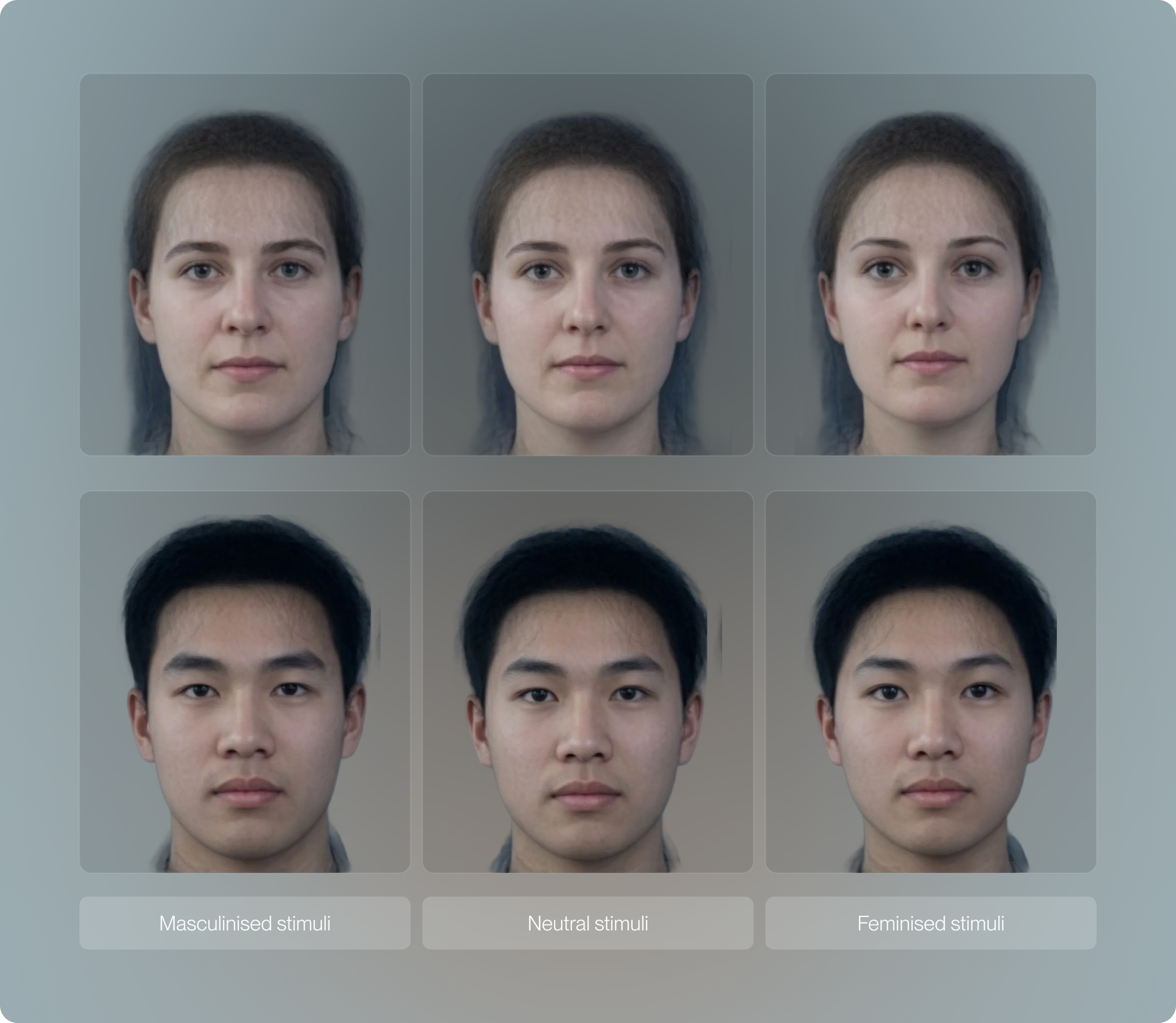
Adapted from Scott et al. (2014)11
Results and Findings
Femininity Predicts Attractiveness Across Methods
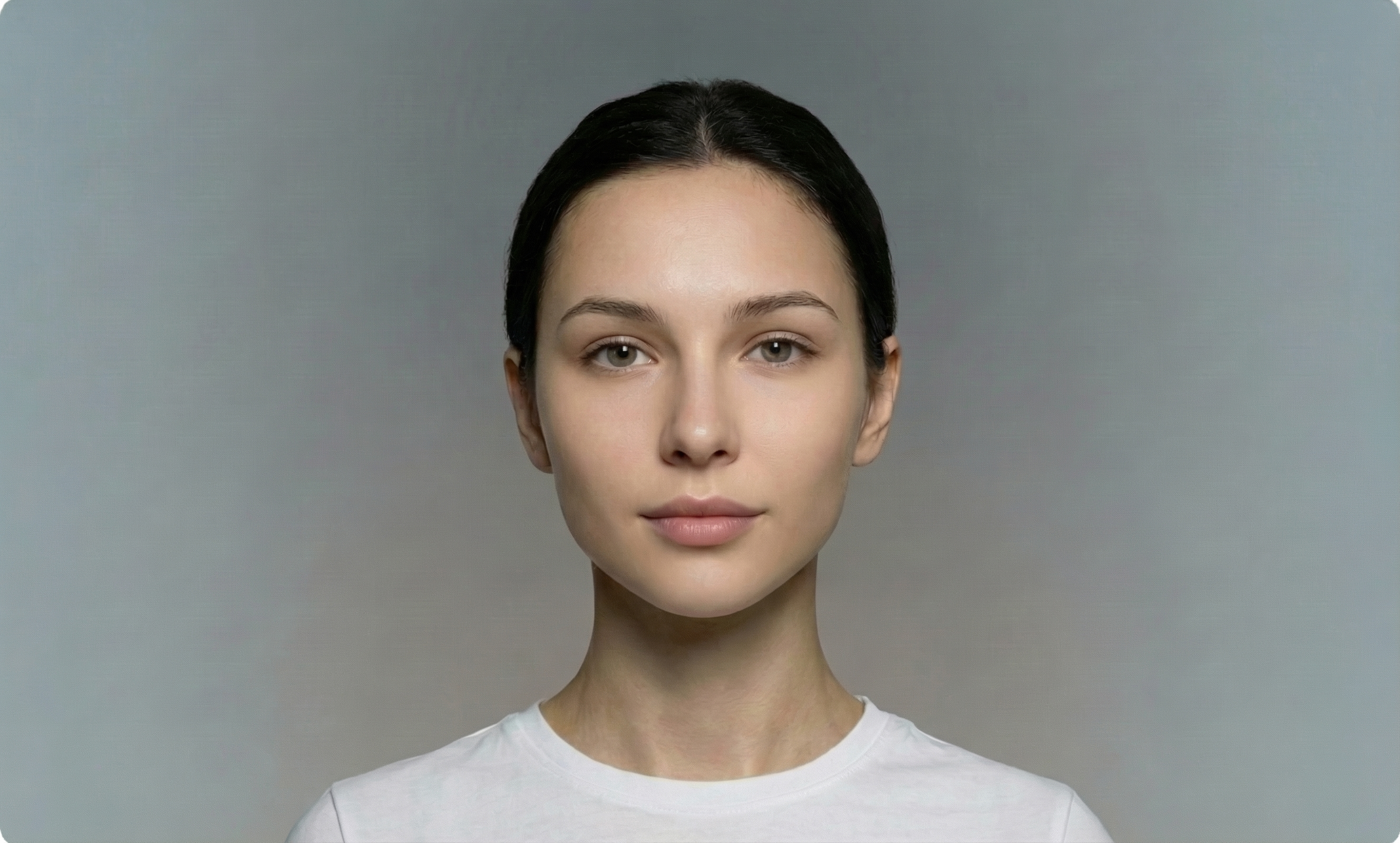
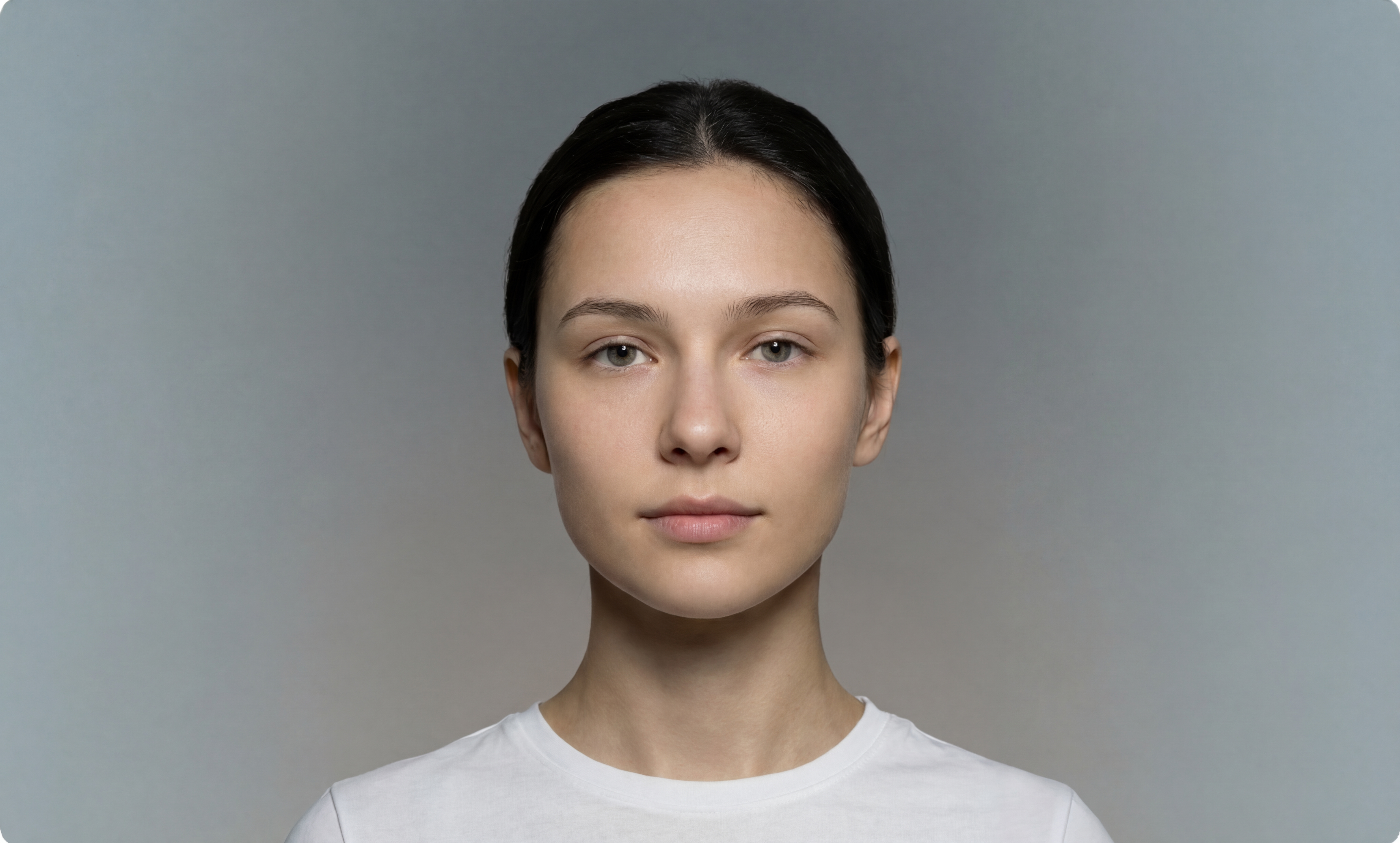
Across classic manipulation studies and very recent natural face morphometrics, increasing female facial femininity reliably raises attractiveness. In laboratory morphing experiments, feminised female faces are preferred over average female faces10. In large cross-cultural datasets using unmanipulated photographs with geometric landmarking, femininity in women predicts higher attractiveness across populations4, 12. There are no absolutes in science, but the results are exceptionally consistent and highlight femininity as a core cue to female facial beauty.
Before
After
Masculinity Effects Are Often Weak and Context-Dependent
For male faces, results strongly diverge by method and context. In early controlled morphs, observers showed a preference for slightly feminised male faces over hyper-masculinised versions, which are judged dominant but less prosocial10. Using manipulated morphs, a study found that some urban and highly industrialised populations show preferences for more masculine men, compared to small-scale societies of hunter-gatherers or farmers11. Similar studies using morphs also show that preference for masculine faces is strongest in healthier, more developed contexts44. However, in large cross-cultural datasets using natural faces, male facial masculinity is not associated with attractiveness.
Averageness and Femininity Outperform Symmetry and Masculinity
When these core features of facial aesthetics are directly compared using geometric morphometrics on natural faces, averageness and femininity emerge as better predictors of attractiveness over symmetry or masculinity16.
Eyes and Brows are the Most Dimorphic Feature
Recent research indicates that eye and brow regions contribute disproportionately to sex differences in facial shape, helping explain why brow ridge smoothness and height, and perceived eye size strongly influence impressions of femininity and masculinity4.
Sex-Asymmetric Summary
Women’s faces
Across populations, femininity consistently predicts higher attractiveness using both experimental natural faces methodologies3, 10, 11.
Men’s faces
Masculinity is dependent on context and method. Women with unrestricted sociosexual orientation, self-perceived as more attractive, in their mid-twenties, and strictly heterosexual are more likely to favour more masculine facial traits. In large modern studies using natural-face data, the effect of masculinity on attractiveness is weak and inconsistent12, 16.
Limitations: Why Facial Dimorphism Does Not Determine Attractiveness
For females, it is important to consider that although increased femininity improves perceived attractiveness, there is such a thing as too much femininity. Keep in mind that feminine traits that extremely deviate from averageness could potentially hurt aesthetics, and some masculine traits can look good on women. Indeed, many famous and highly attractive celebrities show some masculine features (think of Cara Delevigne and her thick eyebrows, for instance).
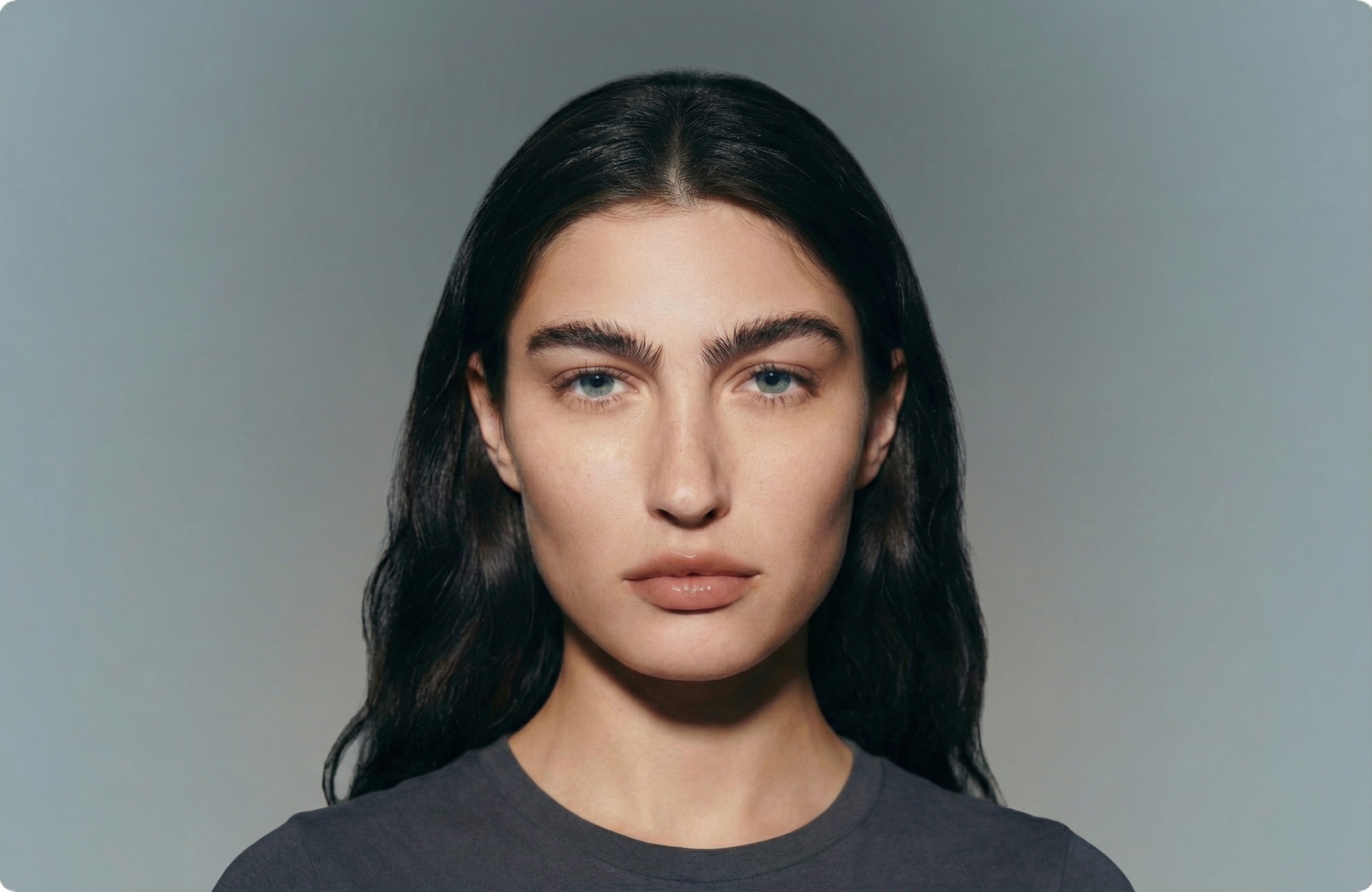
Female face with masculine traits
The relationship between male facial masculinity and attractiveness is complex and far from definitive. A more reliable starting point could be to enhance koinophilic averageness and symmetry, which show more universal, cross-cultural effects. Still, there are circumstances in which greater masculinity can increase appeal, and within reasonable bounds, moving toward more masculinity is unlikely to reduce your attractiveness.
Conclusion
Research on facial aesthetics highlights a remarkable role of femininity for beauty and attractiveness. Across cultures and age groups, people tend to prefer more feminine female faces. Evolutionary psychology suggests that femininity is universally liked because it signals reproductive health, fertility, and youthfulness (neoteny). In contrast, the appeal of facial masculinity is much more complex. The scientific evidence shows no universal or general preference for highly dimorphic male faces. Instead, preferences vary by audience and context, as studies show that certain groups and in some specific contexts, facial masculinity is favoured. As with any other facial feature, sexual dimorphism must be considered alongside the other tenets of beauty, as it is their interplay and harmony which makes facial aesthetics.
References
- 5
Samal, A., Subramani, V. & Marx, D. An Analysis of Sexual Dimorphism in the Human Face. Sch. Comput. Fac. Publ. https://digitalcommons.unl.edu/csearticles/95 (2007).
- 18
Batres, C. & Shiramizu, V. Examining the “attractiveness halo effect” across cultures. Curr. Psychol. J. Diverse Perspect. Diverse Psychol. Issues https://doi.org/10.1007/s12144-022-03575-0 (2022) doi:10.1007/s12144-022-03575-0.